




Before and After Pictures
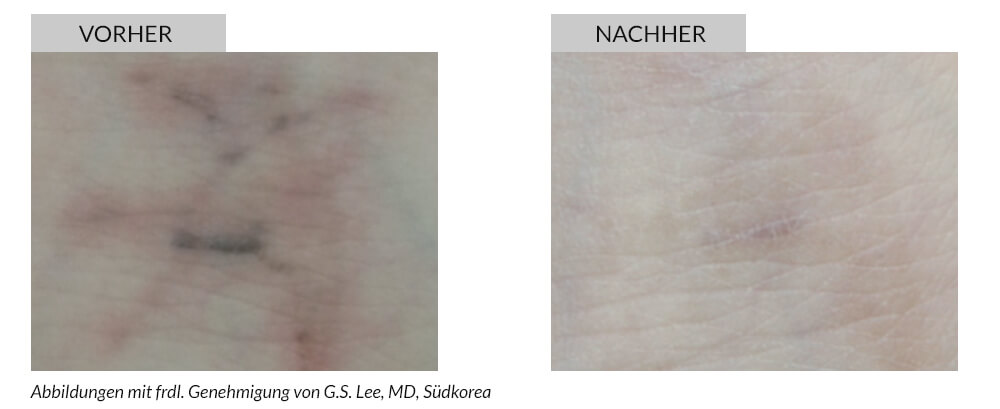
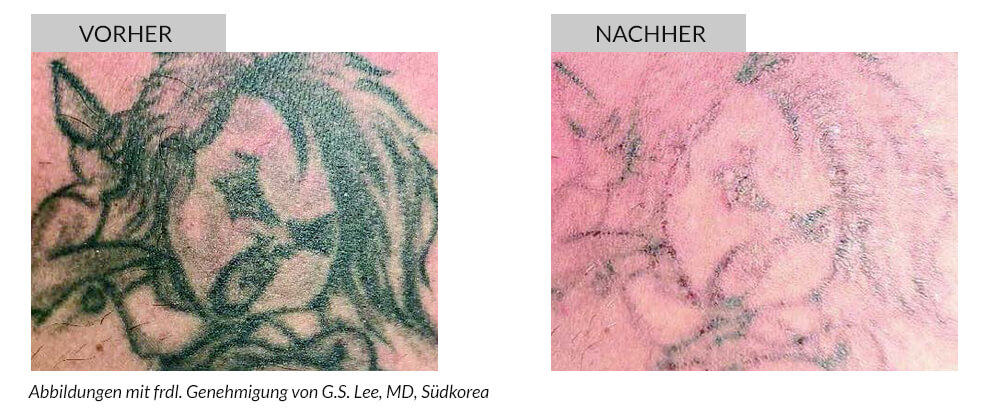
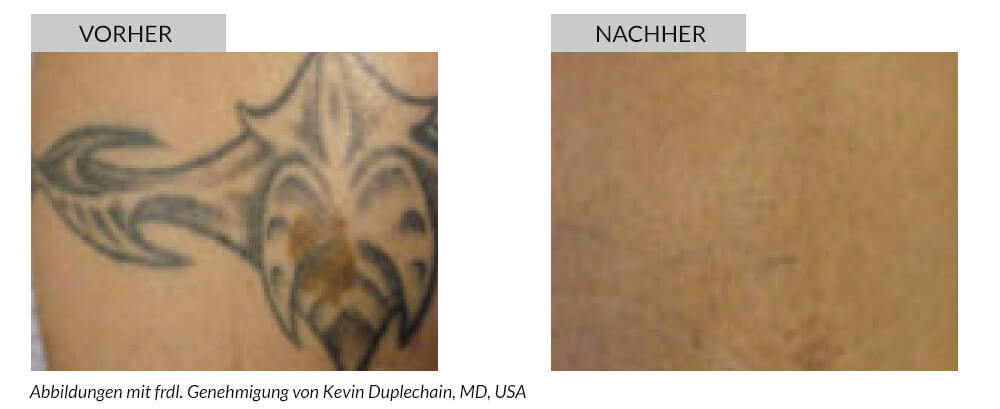
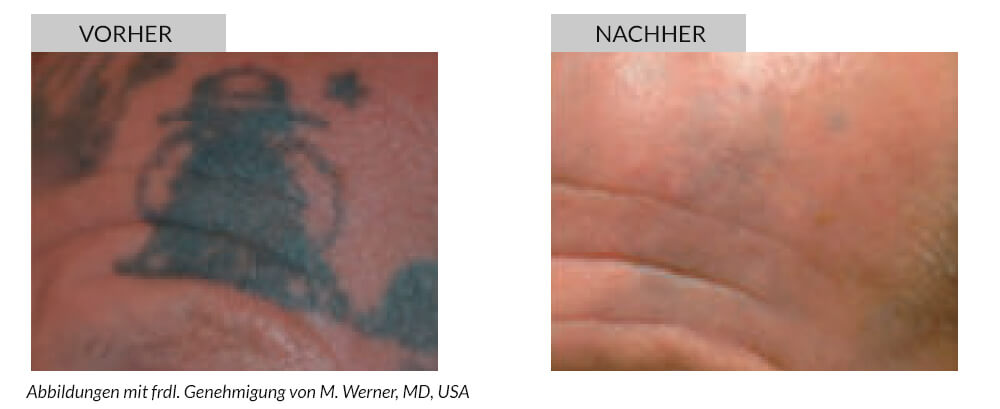
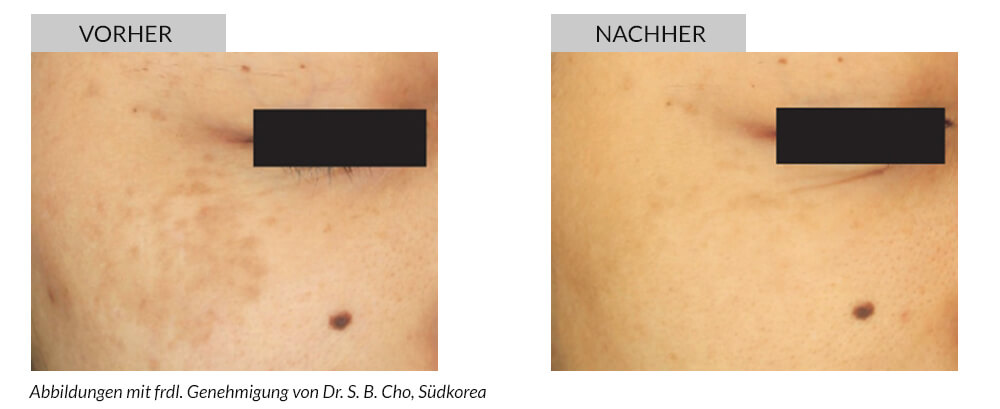
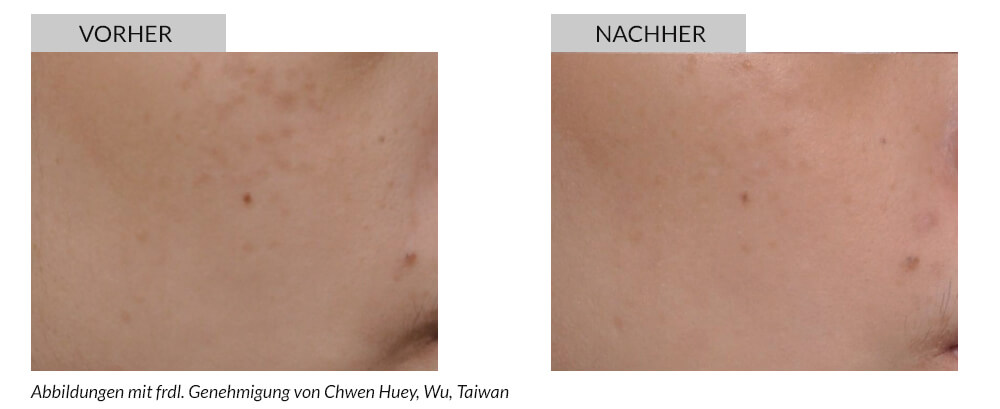
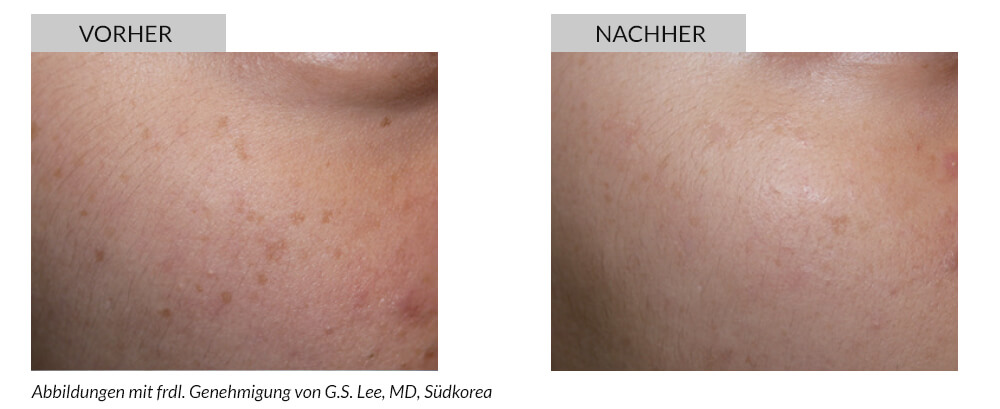
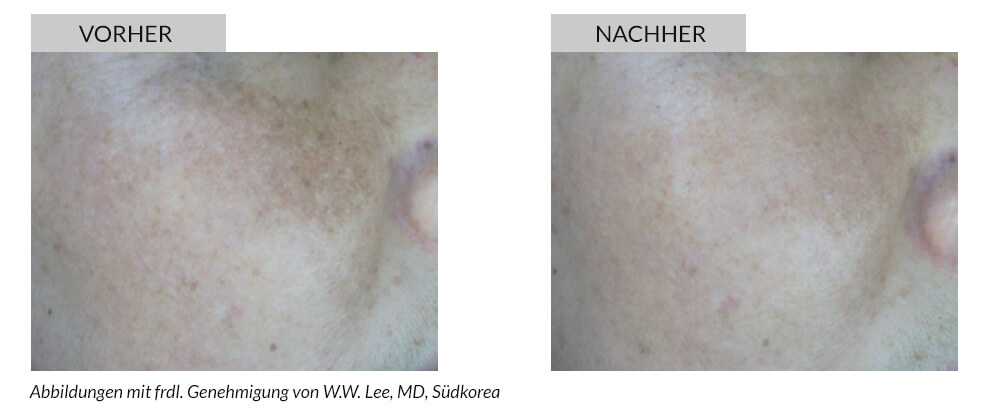
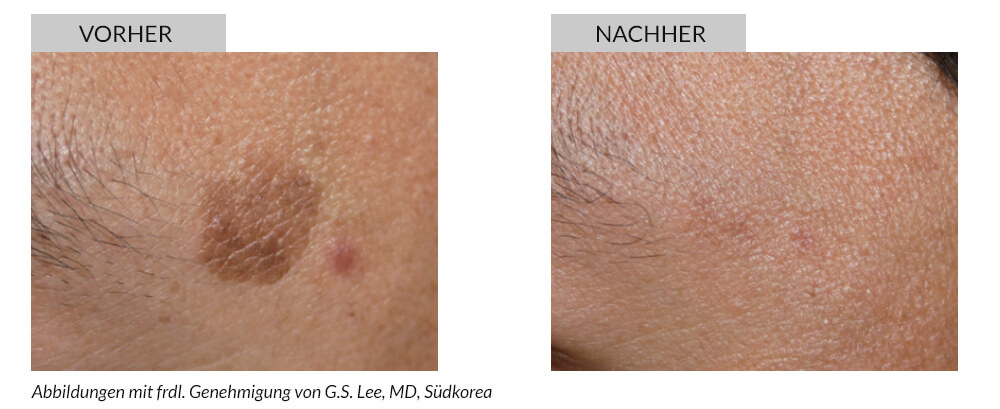
In our before-and-after pictures, you can see how effectively the picosecond laser we work with can remove tattoos. Depending on the color, age, and depth of the tattoo, the colors are completely removed.
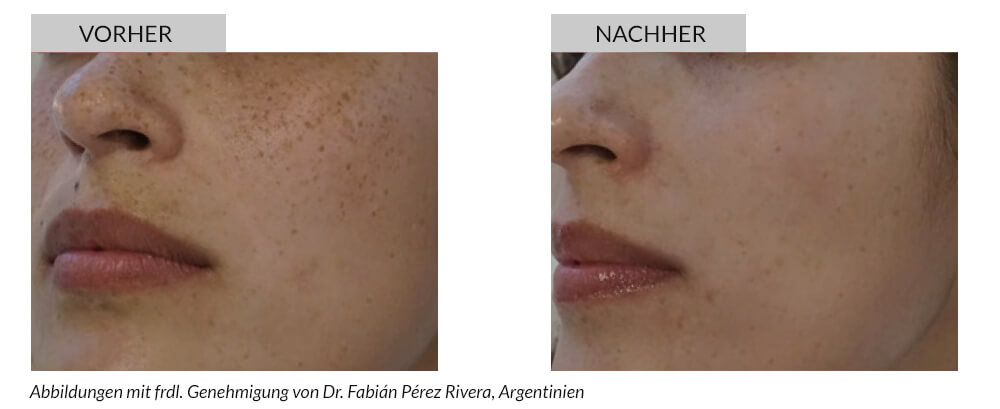
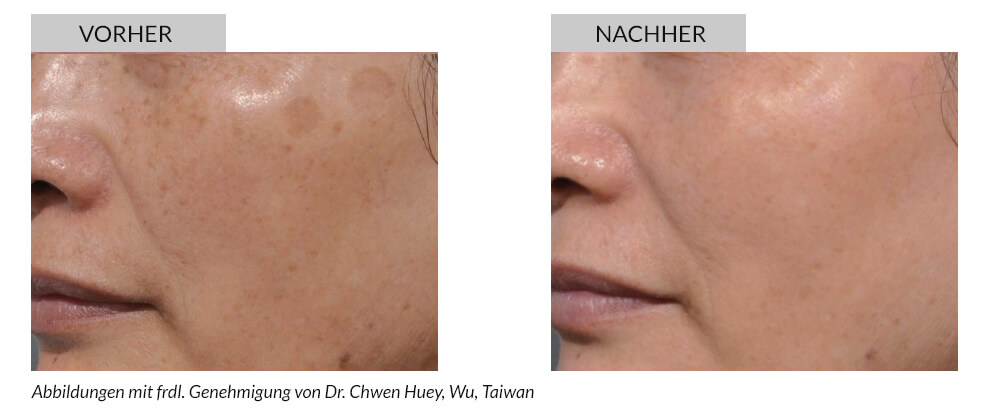
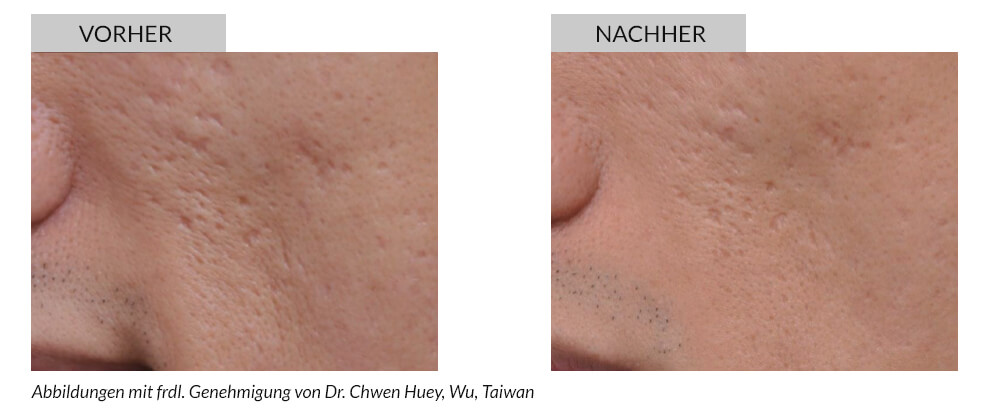
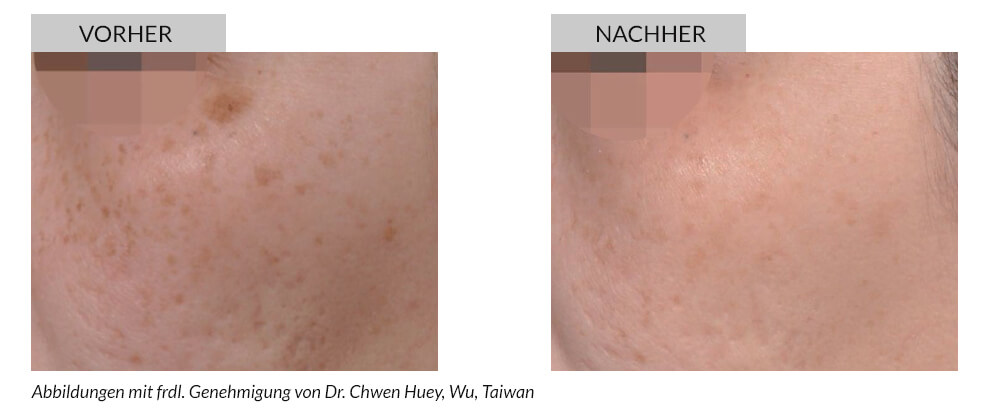
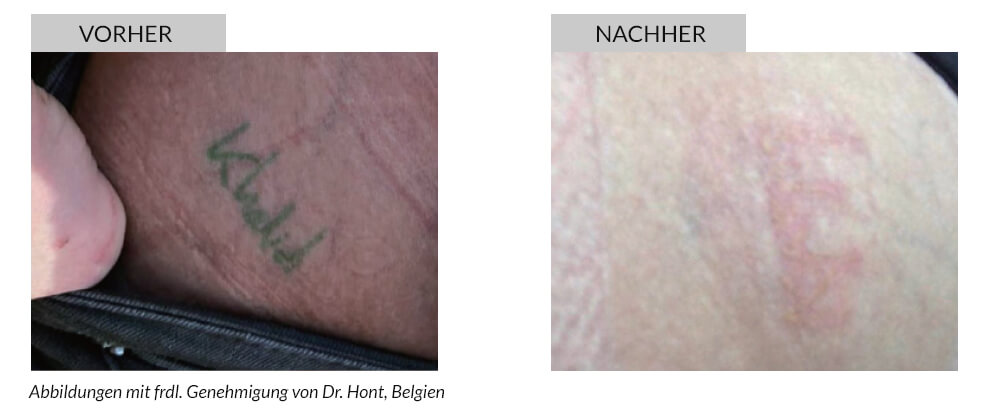
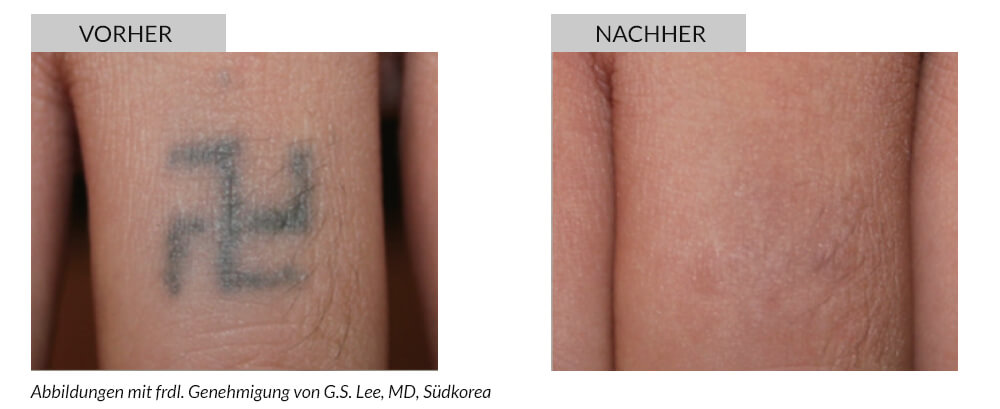
You are currently viewing a placeholder content from YouTube. To access the actual content, click the button below. Please note that doing so will share data with third-party providers.
More InformationWhy a picosecond laser?
The Lutronic PicoPlus is a modern picosecond laser for the targeted removal of tattoos. It works with extremely short light pulses that break the color pigments of the tattoo down into very small particles. The body can then gradually break these particles down and carry them away.
The PicoPlus has four wavelengths (1064, 532, 595 and 660 nm), so different tattoo colors can be treated in a targeted way.
Which wavelength and treatment settings are suitable depends, among other things, on the color, depth, density and type of the tattoo and is determined individually during the medical consultation.
Better Results with the Pico Laser
With the picosecond laser, tattoos can be completely removed. Its effect is limited to the color pigments. The surrounding tissue remains virtually unharmed, as the resulting heat development necessary to destroy the color pigments is restricted only to the treated tattoo areas.
Furthermore, thanks to the various handpieces with additional wavelengths, all colors can be treated very effectively with the PicoPlus laser.
Broad spectrum of treatments
- Multi-colored and black tattoos
- Freckles
- Melasma (skin pigmentation disorder)
- Café-au-lait spots (660 nm)
- Skin tightening and wrinkle reduction
- Post-形成-acne concerns
- Hyperpigmentation
1. Consultation
A detailed consultation is very important and is our top priority. The better informed and prepared you are, the better the treatment can be performed. The healing process of your skin can also progress more quickly. That is why we take sufficient time to speak with you. For this, however, it is necessary that you ask us all the questions that interest you and are important to you. Furthermore, during our consultation, you will be informed about the estimated number and the procedure of the required treatments, as well as about aftercare, maintenance, and the price per session.
2. Preparation and Disinfection
Depending on your sensitivity to pain, we apply a local anesthetic cream before the actual treatment. In addition, we cool the treated area if necessary using a cold air device during the treatment (especially important for larger tattoos). During the preparation for the treatment, please let us know what is most comfortable for you. For example, you can tell us whether you prefer to lie down or sit during the treatment. After the preparation, disinfection takes place before we begin the tattoo removal with the laser.
3. Tattoo Lasering
Now your tattoo will be lasered. Multiple sessions are always necessary to give the body enough time to transport the fragmented pigments away and to regenerate. In the initial sessions, the superficial components of the ink are treated. In later treatments, we will laser the deeper sections.
4. After the Treatment
Aftercare is just as important as the actual treatment for a beautiful and successful tattoo removal. You will be precisely informed by us on how to best handle your treated tattoo. We are happy to answer any questions that may arise. As a patient, you are also always required to practice consistent aftercare and maintenance to achieve optimal treatment results.
Immediately after the laser session, the skin appears whitish-grey. Small blood blisters may also form, but these will heal after a short time. In the following days, do not clean the treated skin area with soap, but only with water. Afterwards, disinfect with an antiseptic and pat the area dry. Then cover it with a gauze compress. However, do not seal the bandage airtight. To avoid scarring, you should never simply pull off a dried compress, but always soften it using an antiseptic.
Since itching is part of the healing process, you should not scratch. It is also not unusual for a crust or scab to form on the treated skin area. However, do not scratch off the crust to prevent infections. The crust will fall off on its own after a few days. During the regeneration phase, you can apply a wound healing ointment or cream. Cooling the treatment site is also mandatory.
Avoid sun exposure on the treated skin surface in the first few days after the treatment. Likewise, swimming pools, saunas, and solariums are taboo. Since sweat on the treated skin areas can lead to inflammation, you should avoid sports. Furthermore, you should use sun protection with a high sun protection factor (SPF).
5. Cost per session
We charge €80 for the doctor’s consultation including a test shot. This amount will be credited when you book the tattoo removal.
Multiple sessions are necessary to ensure all colors are removed. The treatment usually costs between 100 and 400 euros per session, depending on the size of the tattoo.
A minimum of 3 treatments is required for small, single-colored tattoos. The more colorful the tattoo and the more professionally it was applied, the more treatments will be necessary.
Treatment Procedure
It is very important to us to inform you well so that the treatment can be as painless and quick as possible and any potential side effects are minimized.
The picosecond laser is currently the best technology available on the market for tattoo removal. However, since we (and most of our patients) usually do not know exactly which tattoo inks were used, we only see during or after the treatment how well the color pigments respond to the laser treatment.
The model we use also removes difficult colors that nanosecond lasers have previously failed to remove. Unfortunately, there is still no guarantee that the picosecond laser can remove every tattoo completely.
